Your Deeds Condemn You: The Light, the Temple, and the Six Water Jars – John 2 and John 3
The Condemnation of Deeds and the Work of Christ
Gospel of John 3:16–17 says:
“For God so loved the world, that he gave his only begotten Son, that whosoever believeth in him should not perish, but have everlasting life.
For God sent not his Son into the world to condemn the world; but that the world through him might be saved.”
Jesus clearly states that His mission was not condemnation but salvation. Yet as the chapter continues, He explains what condemnation truly is.
John 3:19 says:
“And this is the condemnation, that light is come into the world, and men loved darkness rather than light, because their deeds were evil.”
The condemnation is not merely an external judgment pronounced upon humanity. The condemnation is revealed in humanity’s response to the Light. When Christ, the true Light, entered the world, men preferred darkness because darkness concealed their deeds.
John 3:20 continues:
“For every one that doeth evil hateth the light, neither cometh to the light, lest his deeds should be reproved.”
Here Jesus exposes the root issue: evil resists exposure. Men avoid the Light because the Light uncovers what is hidden. Their own deeds testify against them. In this sense, the deeds themselves become the evidence of condemnation.
But John does not stop there. Verse 21 says:
“But he that doeth truth cometh to the light, that his deeds may be made manifest, that they are wrought in God.”
The one who comes to the Light is not claiming perfection. Rather, he is willing for his life to be exposed before God so that what is truly wrought by God may be revealed.
This theme connects deeply with earlier signs in John’s Gospel.
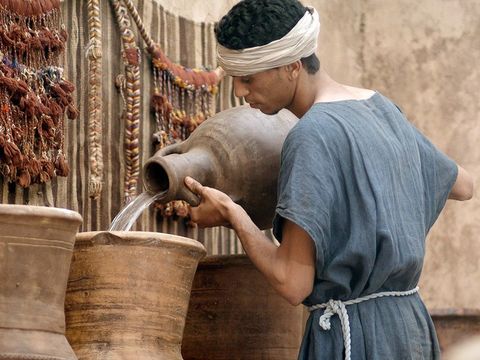
At the Wedding at Cana there were six water jars prepared for purification. The servants were commanded to fill the jars with water. This part was entrusted to man. Human hands carried the water. Human obedience filled the vessels.
Yet no man could turn the water into wine.
Only Christ could transform it.
Likewise, when Jesus spoke of the temple, the Jews answered that it had taken forty-six years to build. Human labor could construct the physical temple, but when Jesus said:
“Destroy this temple, and in three days I will raise it up,”
He spoke of something only He could do. Man could destroy the temple, but only Christ could raise it again.
This reveals a profound spiritual pattern throughout John’s Gospel:
Man must come to the Light.
Man must allow his deeds to be reproved.
Man must fill the purification jars.
But:
Only Christ transforms water into wine.
Only Christ raises the true temple.
Only Christ brings life out of death.
Humanity participates in obedience and exposure to truth, but transformation itself belongs to God. The deeds of darkness condemn because they resist the Light, while the one who comes to the Light enters the work of God.
The jars may be filled by man, but the miracle belongs to Christ. He truly leaves the best wine at the last minute because he is the wine that is poured out a living sacrifice.