The Sin of omission (James 4:17).

Mr. James Haliday excerpt from Quiet Time Companion. To him who knows the good to do and does not do it, it is sin” (James 4:17).

It goes about talking about how we tend to focus on sins of commission, the wrongs we do, rather than sins of omission, the good we fail to do.

But in Christ’s Bible, when someone was condemned, it was not over his sin of omission. A man was to put out of a wedding because he had no wedding garment. That was Matthew 22:12. And five virgins were executed from the wedding party because they had no oil in their lamps (Matthew 25:3-11). And a servant who buried his talent in the ground instead of using it for profit was condemned. That rich man failed to care for his neighbor was condemned for it (Luke 16:19-24). And a barren fig tree that failed to produce fruit was cursed and died (Mark 11:20-24).

You say, “But I’m interested in a deeper spiritual life.” Well, a deeper spiritual life is one spent doing good for others. And the basis on which you’ll be judged and rewarded is based on what you do for others. “And the king will say, ‘I was hungry and you didn’t feed me. I was thirsty and you didn’t give me to drink. I was a stranger and you didn’t invite me into your home. I was naked and you didn’t give me clothing. I was sick and in prison and you didn’t visit me.’ Then they will reply, ‘Lord, when did we see you hungry or thirsty or a stranger or naked or sick in prison?'” And he will answer, “I tell you the truth. When you refuse to help the least of these my brothers and sisters, you’re refusing to help me” (Matthew 25:41-45).

So then, when you have the chance to do good, do it. This is just my opinion about the idea of doing good. Of course, Jesus was on earth and he did good, and it was the will of God that he came to do the will of the Father.

WHAT ARE YOU HEARING TODAY: 1 Kings 18:1

“The word of the Lord came to Elijah saying, ‘I will send rain on earth.’ Three years earlier, God told Elijah to announce that there was a severe drought coming. As a result, it was all people talked about. And the God told him to announce that rain was coming, and they should prepare for it.”

“Understand this, unless you learn to tune your ear to hear what God is saying, you will be ready for what life throws at you. God can tell you when to save, when to sow, when to buy, when to sell, when to come to the table, and when to work. In your ears, he will hear the word. When you’re saying, ‘This is the way,’ walk in it” (Isaiah 30:21).

I specifically love this passage, you know, because there are rough times that are coming on the face of the earth. And you know, we’re going to have people that will be agitated, people that will be fearful. And I think that one of the things that people can be reminded of is that we can, like, tune in our ears to hear from God, what he has to say about a specific situation. So, when we’re doubting, when we’re worried, or in stress. And I think this is why I really love the word of God, because you can always hear from God. And the voice of God is calm, is assuring. Even if you want, he’s gentle and assuring.

And he says that, “But Satan can also speak to you and tell you things like, ‘You’re going bankrupt, you’re going to die, you’ll never succeed. Nobody loves you.’ And you’ll never hear that from God. Despite what you’re hearing around you or within you, you must believe God’s faithfulness and trust him to fight for you.”

“Knowing he would soon be crucified, Jesus prayed, ‘Father, glorify your name.’ And a voice from heaven came saying, ‘I have both glorified it and will glorify it again.’ Therefore the people stood by and heard it and said that it had thundered. That’s John 12:28-29.”

The Genealogy of Jesus, Sin, and Righteousness

The genealogy of Jesus. Matthew 1:1–17
Abraham → David → Solomon → Joseph → Jesus. (My point is Mary wasn’t pregnant with the seed of David, Joseph was the adoptive father, Mary’s genealogy came from Abraham directly).

Job 35:7–8
“If you are righteous, what do you give to Him?
Or what does He receive from your hand?
Your wickedness affects a man like yourself,
and your righteousness a son of man.”

Job 22:2–3 (spoken by Eliphaz)

“Can a man be profitable to God? …
Is it any pleasure to the Almighty that you are righteous?”

Luke 17:7–10

“Does he thank the servant because he did the things that were commanded him? I think not.” (v.9, KJV)

The presenter attempted to convince me that all our righteousness is nothing but rags before God.

I responded that yes, it is nothing but rags before God.

I grew and threw away childish things. I was not proud of some of the things I did as a child. I definitely know that there is none that is righteous. I don’t think those things appeal to me now that I am older. I’ve had to go through stages of refinement from my madness, to understand that I was not okay.


Tamar Is Not Desperate

I looked at this guy, and he wrote that Tamar was a woman that was desperate.

I really do not like when you describe Tamar as a woman that was desperate.

Tamar had an agreement with Judah. He couldn’t keep to his agreement. He wanted to play smart, and she outsmarted him.

Some women know that men prefer prostitutes. Tamar did what most women would do: she dressed as a prostitute. Men prefer cheap sets.

She got pregnant for Judah because he promised to give one of his sons to her. He went out of the bargain trying to play smart, because his sons were not ones that wanted to be responsible.

I don’t think she was desperate. It was an agreement. They were trying to slide her. The way they painted her was that Tamar was desperate and it’s good to be desperate.

Sin in a generation reproduces itself.

Zachariah, Doubt, and Generational Patterns

The holiest of the holy person, Zechariah, was going to the temple to pray.

When the angel of God came and told Zechariah that he was going to have a baby, and that he should be John the Baptist, who would preach repentance—Zechariah doubted.

Because he doubted, he could have a son, ie John the Baptist, John the Baptist, who saw Jesus Christ baptized, still had confusion. He was asking, “Is this the Messiah?”

There’s a tendency that sin replicates from one generation to another.

The Genealogy of Jesus and Misinterpretation

This man was trying to convince me that doing sin was okay.

Jesus’ mother was a virgin. Jesus used someone that was holy to come out.

Let’s say the genealogy of Jesus came from the male side. They will talk about the male side and who they married. It was from Joseph’s lineage that King David’s lineage came from.

But Joseph’s seed was not used. Mary was fertilized by God.

Mary traced her own back to Abraham.
Joseph traced his to David.

The promise had to come because Joseph was the adoptive father.

Bathsheba and the Danger of Justifying Sin

When they talked about the genealogy of Jesus, they mentioned women like Bathsheba.

Typically, David slept with Bathsheba. And people try to justify it by saying God still allowed Bathsheba.

What Bathsheba did was terrible. She was married. A married woman was called, and she couldn’t say no?

If you were the man married to her, and another man set you up to kill you just to take your wife, would you say what she did was good?

What she did was very bad. God said it was very bad.

God did not only deal with David—He allowed consequences. The child conceived died because it came through adultery. Not only did King David lose the son he loved the most – Absalom, David wanted to die in his stead as a result of killing Uriah to placate David for the loss he gave him SOLOMON.

That is not something to justify.

Willful Sin vs Ignorant Sin

When they say, “I was conceived in sin,” it does not mean willful sinning.

Willful sinning is different.

The Bible says if I know what sin is and I do it, there is no justification.

A child can be pardoned because they don’t know. But when you know, and you still do it, that is different.

David, Consequences, and Loss

This man tried to justify David’s sin.

But David lost his child.

He also lost Absalom, the child he loved.

God told David: you killed Uriah, and I will take something you love.

David knew why Absalom died. That’s why he blamed himself.

Then Solomon came later.

Generational Sin

From Rahab to David to Solomon, you see patterns.

David had many wives. Solomon had many wives.

Sin replicates.

You may not know it, but when people tell you sin is okay, know that there are consequences.

Personal Responsibility and Free Will

The book of Ezekiel 18 explains that each person bears their own sin.

Everybody has a choice.

You cannot say someone is holy by themselves. God makes a person holy.

Righteousness is not owned—it is given.

Righteousness and Its Reality

People think doing right brings reward on earth.

But Jesus Christ said:

“Blessed are those who are persecuted for righteousness.”

Even Abraham was counted righteous because he believed, not because of works.

Any person that you see that is living a life that they are worthy of God, it’s only God that made that person holy.

A lot of people think that if you are doing what is right, you will get something good. God used the Babylonians, not the righteous people.

There’s one thing to do sin, there’s another thing to try to justify sin.

Book of Leviticus 20:8

“I am the LORD which sanctify you.” (its God that makes us holy)

Also:

Leviticus 21:8

“For I the LORD, which sanctify you, am holy.”

He used Cyrus, the king.

You can’t say that King Cyrus was righteous.

But he used him.

These were people that didn’t even have a righteous background, and he used them.

It’s very possible that God can refine someone.

But that’s because he chose to refine the person.

We always keep forgetting that it’s the Lord, my God, that makes the holy. God makes people holy.

It’s not because any race is good, or any person is good, or any slate is good.

Righteousness is something that people are, rather than something that is imparted to us through Christ Jesus to enable us do what is right.

It’s not something that we own.

If I wear a coat to cover myself because I am cold, that coat might not be mine.

I am just wearing it over my body because I want to be warm.

That doesn’t mean that it’s mine.

In essence, if you want to marry who you want to marry, marry the person, but do not attempt to justify it.

If you want to sin, sin. But believe God out of it, right?

Because God’s ways are perfect.

He does not endorse sin.

Humans that do evil and then try to say that God allowed it because God is merciful.

You hear the Bible say, often say something like, “You see a righteous man perishing in his righteousness.”

Solomon will say, “Don’t be overly righteous, you don’t want to die before your time.”

Anybody that chooses to live a righteous life lives a lonely life.

Righteousness in terms of how we see it.

When Jesus came, Jesus will say, “Blessed are those that are persecuted for righteousness.”

Every time that God ascribes righteousness to a person, he will tell them that their reward is in heaven.

When Abraham was accounted to him for righteousness, did he have any great works? No.

Abraham believed God, and it was accounted to him.

He didn’t have any physical thing he could see. He just believed God.

That’s why some people say that there’s no reward for righteousness.

Because on Earth here, there’s possibly no reward for it.

How to Teach People to Respect You

I came across a psychology board on pin interest saying ” How to teach people how to gain respect from others. In today’s culture, we seldom mix respect with honor. Honor means to esteem someone’s worth highly, while respect means to regard somebody. We are not mandated to respect people (See King David and Shimea, 2 Samuel 16:5–13), but it is a command to honor people.

Looking at scriptures like Genesis 4:5 and Numbers 16:15, we see how respect is used in context. Cain’s offering was rejected because he gave something that did not show regard for God. His giving reflected how he saw God. Abel, on the other hand, gave his best. So, we have a choice to accept or reject respect.

Deuteronomy 17:11 talks about judgment, that we should not have respect for persons. Many times, people pass wrong judgment on us, saying things that are not true about who we are. You should not accept wrong judgment, because if you accept it, you will pass it on to others. This is how it spreads, even in families.

Respect is born out of love. That is why a man is told to love his wife, and the wife to respect her husband. Without love, respect cannot stand. This is why respect is not something you demand.

In 1 Samuel 25:35 and Psalm 4:4, we see that we should not respect the proud, and that respect is tied to the covenant of God. In the Old Testament, people kept the laws of God, and in the New Testament, we have a new covenant by the blood of the lamb.

Ecclesiastes uses parables to liken respect and honor, like a dead fly that produces a foul odor. So, in parables, honor and respect are sometimes used interchangeably, depending on context.

Lamentations 5:12 shows that in judgment, no one is regarded. So, you should not respect a judgment that is not in truth. If someone says a person is a thief when they are not, you cannot regard that judgment. This is where oppression begins.

God is not a respecter of persons. When we do not respect God’s people, even those serving Him, God will not regard us. The respect we give is the respect we receive.

Respect is how a person is. It is part of identity. A person cannot respect you if they do not respect themselves. When Cain gave a poor offering, it showed how he saw God, not who God is. So, respect is not about how you are, but how the other person sees.

Luke 18:2–4 shows a judge who did not fear God or regard man. Because of persistence, he responded to the woman. So, persistence can make people regard you, but that is not real respect. It is pressure, not truth.

In Luke 20:13 and Mark 12:16, respect is also shown in different contexts. The Bible says you can reprove an elder but not rebuke them. If you reprove a wise man, he will love you. If you reprove a foolish man, he will hate you. Not all older people are wise, as the book of Job shows.

Romans 13:7 says we should render to all what is due. You give respect to those who have it. If a person does not have respect for themselves, they cannot give it to you.

A person who does not respect their own body will not respect others. They will think everyone is like them. You cannot produce what you do not have.

So, asking people to respect you is often unnecessary. People who ask for respect may be trying to fix something within themselves. The Bible says do not respect the proud. Many times, people demand respect because they feel they are losing it within.

Habakkuk shows that God raised the Babylonians, people who did not fear anyone and were gods to themselves, to carry out His purpose. This shows that even people without reverence can be used by God.

Honor is positional. It is to esteem someone’s worth. Genesis 49:6, Exodus 8:9, and Exodus 14:17 show that honor can be gained and expressed in different ways. Exodus 20:12 commands us to honor our parents. But this does not mean accepting wrongdoing. Honor your parents in the Lord.

Leviticus 19:15 and Numbers 22:7 show that honor can be a choice, while Deuteronomy 5:16 shows it as a command. Judges 9:16 and Judges 13:7 show how Abimelech was honored by people, even though he was not the most honorable.

So, honor can be given by God or by men, and it can be influenced.

In conclusion, honor is a command, but respect is a choice. Respect comes from within a person. If someone does not have it, they cannot give it. So, you cannot force people to respect you. For more interaction on respect see the Samaritan woman and Jesus’ conversation. John 4: 1-13.

Suffering for Christ’s sake – Genesis 14:18-20, Kings 17:7-16, 1 Kings 17:2-6.

They say in truth that suffering is not for nothing. I was listening to a podcast by Mr. Femi. These are very controversial topics. You know that there are very few people that talk about Christianity the way Christianity is. But I want to put it to you that some people say that just because you suffer does not mean that you are going to get something good in return.

We forget that the scriptures also say—I do not always like to talk from a theoretical point of view, that is, from a Solomon’s point of view, an ethical observation point of view. I like to talk from scriptures, and that’s just how I am.

There’s a scripture that says that if we suffer for Christ’s sake, it’s beneficial.
The last shall be the first, and the first shall be the last.

In essence, whatever you do for God is way beyond what you do on earth. It’s for God; it’s an eternal reward in God. If you keep to your integrity, it preserves you. It preserves your character from sin, from your propensities to sin. Holiness does what it does—it preserves you. And they call it, David would call it, seasoning—a salt. And salt does what? It preserves.

It allows your integrity to last—not because it is not based on Christ—but it allows your character to be formed in Christ. That’s why, in essence, you do what is right, not because you are good, but because it allows your character to be formed in Christ. You look more and more like Him. When we look at Christ, we become more and more like Him.

So, in essence, you’re being changed, renewed, transformed into the perfect man that is Christ. That’s why we maintain some form of integrity in Christ. Some people call it holiness—whatever the case, you choose to see it.

He said it doesn’t matter how long you suffer. Some people think that just because you suffered does not mean that you will make it. If everything is always equated to “making it” or “blowing,” it would be nice. But in truth, I have seen—when I was young, I have had my path cross with people who changed my perspective of how I see the world, and in a good way, in a godly way.

Because I didn’t actually think that I was deserving to meet people who have influenced my life. But I feel that God put those people in my path to bring me to this point where I am, and I’m really grateful. I think it’s the grace of God. But it really made my reasoning different from how I normally reasoned.

There was a guy, when I was young, who taught us. He ate with us for about 10 years. Uncle said he was like the MD of a bank. And Nigeria wasn’t as corrupt as it is now. He framed my idea of what doing what is right is.

His best friend died. His daughter was in a private school for about 500,000 naira. At the time, it was a big deal to pay 500,000 naira—that’s about half a million. He took up the girl’s tuition and paid for her schooling.

He died when the girl was in 300 level. So she had roughly about—she was doing law, so it was about five years. So he covered the fee for about four years, and then she graduated.

He didn’t mention it to us. We didn’t know that’s what he was doing. But when the girl graduated—because she was in my brother’s class, around SS1 to SS3—she came and narrated what happened after her father died. We were like, “Okay, so who helped you?” And she said, “Uncle Jibola helped.” But he never mentioned it.

And yes, it’s an idea that someone can help you.

I’ve grown a lot, and I’ve kind of admired his life as a benchmark for something that, if you were rich, you could do. But I’m not somebody that believes that you give in order to get. I think you give to people who have no way of helping you—people who are in no position to help you.

So, I can’t say that I’m poor or needy. I’m not going to say that I’m rich either. You know how David would say, “Do not make me poor, that I would beg for bread, or too rich, that I would curse God.” That’s how I feel about Christianity.

I think if you’re blessed, it’s an opportunity to be a blessing to others—not to build up yourself, your image, or your brand like people do now. But, hey, am I the church? No.

I would say that yes, it’s true—if you suffer, there’s no guarantee that if you do what is right, you will have a reward from it here on earth. Because I think we are always incentivized by reward. If there’s no reward, we feel like we shouldn’t do it.

But imagine if every Christian thought like that: “If there’s no reward, I won’t do it.”

So when I hear the pastor say that just because you suffer doesn’t mean you will make it—and just because you have not suffered does not mean you will not make it—the same thing applies.

I have matured over time. I told you about a friend of mine when I was abroad who wasn’t paying bus fare. At that time, I had lost my phone, lost my flash drive—lost quite a lot of things. I was doing my master’s, stressed, and dealing with health problems.

It felt like everything was happening at the same time. And in my mind, I was asking, “Why is this so bad?” I was looking for someone to blame. Yes, it was partly my negligence and partly that I trusted too much. I felt like I was in a developed country—these things were not supposed to happen. But that was wrong. Wrong things can happen anywhere.

So I had to learn that the hard way.

At some point, out of anger, I stopped paying my bus fare for about a month because my phone was stolen. Then I spoke to my friend. She had come into the Czech Republic about a year after me, and she told me she hadn’t been paying her fare for about three or four months.

I was shocked. She said she didn’t have money, but at the time, she had just gotten a job. I thought, “You even have more reason to pay than me.” But then I realized—it’s not always circumstantial.

She wasn’t doing what others were doing, yet she was still getting by.

So I don’t know why some people are blessed and others are not. I don’t think suffering automatically brings blessing. People succeed in different ways—some lie, some cheat, some lose their integrity along the way.

But the Bible says the blessing of God makes rich and adds no sorrow. So you don’t have to lie or cheat to be blessed.

At the same time, some success comes from effort. People work long hours, research, build things. But what God rewards is faith. Because without faith, it is impossible to please God.

Faith removes the idea of struggle. Because once you believe something will work, it doesn’t matter how long—it will work. Faith is the evidence of things hoped for but not yet seen.

So why am I saying all this?

Because the pastor said it doesn’t matter how many years you’ve struggled—if you’re not going to make it, you’re not going to make it. But I think we are too focused on “making it.”

Before, I used to feel like I had to make it because my mother pushed me so hard. But now, my perspective is different. I just want to have enough—to live, to survive. Because at the end of the day, you will die and leave everything.

It’s not about what you have; it’s about the legacy you leave.

Look at Europe—they built for generations. They went through hunger, crisis, hardship, but they built roads and systems. If their forefathers only thought about themselves, it wouldn’t be like that.

It took sacrifice.

And in Africa, there’s this mindset: “Let me just take my own.” There’s no integrity. And when people get abroad, they compromise even more.

But me, I can’t lie to get somewhere I didn’t suffer for. I can’t. Because if there’s no integrity, there is no truth.

And that’s where I stand.

When it comes to who blesses who, this is my opinion. The Bible says a righteous man blesses a righteous man and receives a righteous man’s reward.

Look at Abraham and Melchizedek. Abraham gave, and he received a blessing.

So yes, there are times I have given intentionally because I wanted someone’s blessing. And there are times I gave without expecting anything.

But I believe the weight of the blessing is in the heart of the giver.

Help doesn’t always come from the richest person. It can come from someone you least expect.

So when people say, “I suffered and I’m not blessed,” or “You didn’t suffer and you’re blessed”—I am not the judge. I don’t decide who gets what.

That is between you and your conscience.

A picture of the resurrection of Christ. Daniel 10:8 and Acts 2:27, 31.

I wasn’t in the mood to do this today, but I heard a particular pastor preaching exactly what I read this morning. (https://www.facebook.com/share/v/1KtrYgezLN/) So I said, no, no, no, I have to speak about this today.

So, as you know, have you ever felt like you hear someone speaking and then it’s almost as if the person is saying what you would say? Or it speaks to you, right? They say, “iron sharpens iron.” There are some people that you— you know how when John the Baptist was in the stomach and he heard Mary, he kicked. (Luke 1: 41 – 44)

David loved Jonathan as his own soul (1 Samuel 18: 1).

That’s how you feel like when you come near someone who is like fire, and then you have a fire sensation. Yeah, that’s how I feel about this man’s preaching. So I’m going to leave his preaching up here. I don’t tend to agree with him on everything, but on a majority of things, I definitely think that, yes, I see that he’s doing the Lord’s work. And that’s what I’m uploading, and that’s why I have the video up here.

Daniel 10:8 talks about the comeliness of Daniel. And obviously, you know, a lot of people will talk about this because this is what he was talking about in the whole video. And I read it this morning, but I didn’t feel like talking about it today. But then I saw his video, and I was like, okay, no, I have to talk about it.

So Daniel, in Daniel 10:8, even fasted. He had no pleasant bread, neither did anything pleasant come into his mouth. He didn’t eat any flesh, any wine, for about three whole weeks, just to be able to see visions. He lost strength, and then his comeliness was turned into corruption. I mean, Daniel was like the Bible—the cleanliness of the cleanest priest that you could ever find—and yet he had corruption in him.

Because this is what I was talking about: Daniel was somebody who abstained from everything abstainable. He was the only one that reached for holiness to the point they said he was always in a trance, and yet he had corruption in him. Because it reminds me of what King David says: “Iniquity was I fashioned, and in sin was I conceived.”

Even the best efforts of human beings to be holy—it’s not like it’s in vain, but it just goes to show that there’s a fruitless effort in it. Not that it’s bad, it’s just that there is a fruitless effort in it.

So there’s none as holy as Christ. And scripture says that even Jesus, as our high priest, purified himself. And even though Daniel set his heart to understand and chastened himself, he still had corruption—comeliness turned to corruption. And then Jesus had none of these things, even in the grave.

You know, after this, somebody came, appeared to Daniel, and touched his lips and gave him strength. And the man was the Son of Man that appeared to Daniel and touched him, and he got himself back. And he showed him the scriptures of truth and showed him things that were to come. And this was how Daniel 11, which was the things that were supposed to happen in the latter days, was brought to light.

You know, I don’t want to expatiate on everything I read this morning, but this is like the summary of it.

I was supposed to mention that, you know, scripture says that his body was not corrupt, that he was raised incorruptible—an incorruptible body. He was sown in corruption, raised in an incorruptible body. And because he took on our sin, right, he was sown in corruption, raised in an incorruptible body. But at the time of his resurrection, he had none of those things imputed to him, meaning that God didn’t even allow him to see corruption.

I mean, Jesus couldn’t see corruption—the Holy One. How much more? But we, obviously, our human body will see corruption.

Every time I see this pastor, he says the things I’m supposed to say. I don’t know if this is normal.

1 Corinthians 15:22–23 (KJV):

22 For as in Adam all die, even so in Christ shall all be made alive.
23 But every man in his own order: Christ the firstfruits; afterward they that are Christ’s at his coming.

No matter how far a man goes in holiness (like Daniel), he cannot escape corruption.
But Christ, being the Holy One, not only avoided corruption but defeated it,
and through Him, others can be raised incorruptible.

Unknown tongues, tongues of men and tongues of angels, 1 Corinthians 13 vs 8.

I saw this topic maybe a week ago, and I was supposed to write about it, but I hadn’t typed it yet. it’s an irony that the tongue is the powerful organ yet so small, since life and death are in the power of the tongue.

We are going into unknown tongues, tongues of men, and tongues of angels. The tongue of prophecy and knowledge vanishes away (1 Corinthians 13:8). Why? Because we know in part — our knowledge isn’t perfect, and we prophesy in part. When we come into the kingdom of God, it is said that we come as a child, to understand as a child.

I refer to this as a child’s sincerity, as it should be with God. Paul said, “When I was a child, I put away childish things” (1 Corinthians 13:11). This means his understanding matured, but his sincerity remained. He put away childish things, yet remained a child in heart before God.

First Corinthians 13 tells us that we see through a glass darkly, but even now, I know that Jesus is known to me. When we see Him face to face, the veil is removed (1 Corinthians 13:12). This gives us a clearer perspective.

When 1 Corinthians 14 begins, it speaks specifically about unknown tongues — a tongue that is not known. There is a difference between an unknown tongue and the tongues of men. Acts of the Apostles calls it an unknown tongue. Later, when groups are praying together, they speak in tongues of men.

So, essentially, the unknown tongue is different from the tongues of men. 1 Corinthians 14 introduces the unknown tongue, and then 1 Corinthians 13 speaks about tongues of men and tongues of angels. Paul likens this to a child: when you become fully matured as a Christian, you put away childish things, but you still come to God with childlike sincerity.

Tongues of men and tongues of angels are gifts used in conjunction with a person’s spiritual gift. The unknown tongue is used specifically in the church to prophesy effectively. First Corinthians 14 emphasizes this: when speaking in unknown tongues, we speak to God, not to men (1 Corinthians 14:2). The utterance edifies oneself, while prophecy edifies others (1 Corinthians 14:3–5).

The church benefits from the unknown tongues, as Paul repeatedly mentions — in 1 Corinthians 14:4, 5, 12, 19, 23, 28, 33, and 35. That’s eight times the church is referenced in connection with unknown tongues. The unknown tongue is a gift for personal edification, used in the church to strengthen God’s people.

Paul clarifies in 1 Corinthians 14:27:

“If anyone speaks in an unknown tongue, let it be by two or at the most three, and each in turn, and let someone interpret.”

Notice he specifically states unknown tongue, not tongues of men or tongues of angels. There is a distinction:

  • Unknown tongue — spoken for personal edification, mysteries uttered, requires interpretation in the church.
  • Tongues of men or tongues of angels — may involve actual human or spiritual languages, often understandable by others or the Spirit.

In my understanding, the unknown tongue is spoken by the human spirit in communion with God, while tongues of men or angels may be spiritual languages from God or other peoples. This is why interpretation is necessary in the church. The church was referenced about 9 times in 1 Corinthians 14: 4, 5,12, 19, 23, 28, 33, 35. Even in Acts 2: 11 – 13 people were mocking them saying they were full of new wine (drunk), why they spoke with tongues of men (Acts 2: 4 – 5). So with tongues of men, you speak in a language known of men (Acts 2: 6) but unknown tongue used in church it’s like 1 Corinthian 14:11 without interpretation it liken to barbaric speaking’s (no one understands).

So, when you speak in an unknown tongue, it’s not a language of another tribe, but a spiritual utterance. When speaking in tongues of men or angels, it may be a language understood by others. These are two distinct types of tongues.

This is the major summary I wanted to share today. Unknown tongues edify oneself and can strengthen the church when interpreted. Tongues of men and tongues of angels serve as gifts used by the Spirit.

Jesus is risen. Pray for me, will you please (use grace the writer of this page). Thank you


God love (Agape), the expression of it (Jesus) – John 21:15–17

Types of Love According to the Bible

  • Agape love — the love God has for us, unconditional
  • Philo — brotherly love
  • Storge — family love
  • Eros — romantic love

The God-kind of love is what we are talking about this week. It’s the love that draws us to repent. As sinners, we come to God for salvation. The love of God leads us to repentance. This is why it is written that God commended His love toward us, that while we were yet sinners, Christ died for us (Romans 5:8).

There is a scripture in Romans 8:29:

“For those God foreknew, He predestined to be conformed to the image of His Son, that He might be the firstborn among many brothers and sisters.”

For God knew His people in advance, and He had chosen them. Before we come to the cross, God already knows those who would believe in Him. This is the essence of truth. Those He knew, He predestined. Jesus said that no one can come to Him except the Father draws him (John 6:44). There must be a divine agreement: God draws, and we respond.

We then understand that when THE BIBLE SAYS no one can come to me except the father draws him (John 6:44). Though we may not fully understand His love, we have a semblance of truth that God’s love is real for us. Scripture says that in this we know God’s love — that He sent His only begotten Son to die for us, so that all who believe would not perish but have everlasting life (John 3:16).

The eternal work of salvation shows that God saw our sins while we were yet sinners and sent His Son because of our helplessness. Sin separates us from God, and the breach could only be filled by His Son. That is why Jesus came. Some say He came primarily for redemption — to take our mess and remodel it — which is true. He also came to show us the way. From heaven to earth, and then from earth to the cross, He paid the debt we could not pay.

When you tell someone that God loves them, not everyone understands fully. We cannot fully understand the love of God. Some people may understand the expression of His love through the cross, yet others may not know His love at all. Scripture says that we are still coming into the full knowledge of God (2 Peter 3:18). Until then, we are being made perfect.

God’s love is available to us. This does not give license to continue sinning (1 John 3:8). His love transforms us — from death to life — giving us a quickening spirit (Ezekiel 36:26).

This reminds me of my time in the American Church in the Czech Republic. I had a pastor, John Redmond, who spoke about how Simon Peter failed by denying Christ. Jesus told him that he would deny Him three times before the cock crowed (Luke 22:34). Peter responded, “No, I love You, Rabbi,” even though he doubted he could do it. Jesus asked Simon three times, “Simon, do you love Me?”

Simon’s responses are revealing: the first two times, Jesus asked using Agape, but Simon responded with Philo, brotherly love. This shows that he knew his love was imperfect after failing. As Christians, we have imperfect love, but God has perfect love for us. God is willing to risk everything for us. Jesus, as the head of the Church, came to earth, gave His life on the cross, and brought salvation — a debt He paid that we could not.

Simon’s three responses were rooted in his sense of unworthiness. Jesus replied each time:

“If you love Me, feed My sheep” (John 21:15–17)

Even in Christ, our love is not measured against God’s perfect love. Yet, God knew Simon’s heart before time and had already pardoned him. There is nothing we do, even in true repentance that God does not know.

God’s love is beyond what we can see, feel or imagine. Jesus paid a debt He did not owe — for sins we could not pay. Despite Israel’s failures in the Old Testament, God chose Israel as His own nation and continues to love them, even though they killed His Son. Jesus came to preach to many, but not all believed, even people from His own hometown. Scribes and Pharisees often did not believe, because not everyone can perceive the love of God, even when miracles occur. Knowledge or signs alone do not guarantee understanding.

Even in trials, even when we do not feel God’s love, it does not mean He is absent. As John 6:44 and John 6:65 show, His love compels us to Him. The Greek word is helkuo, meaning to draw. Jesus said:

“And I, when I am lifted up from the earth, will draw all men to Myself” (John 12:32)

Everyone drawn to Him comes through God’s work. Understanding God’s love requires seeing the price He paid in sending His Son. The Old Testament gives examples of God’s character — what is good and righteous. If we do not understand what is good, we cannot fully know what is right (Deuteronomy 6:18).

Thank you.

God can use weak things. (Weak Kings) I Cor 1:27, Luke 23

Solomon was arguably the wisest king in the Bible (1 Kings 4:29–30), yet when it came to fully doing God’s will, he became weak because of sin (1 Kings 11:1–4). Aside from building the temple, which his father David had instructed him to do (1 Kings 6:1; 1 Chronicles 22:6–10), his life shows that wisdom does not always equal obedience.

He was born into wealth and did not have to fight many wars during his lifetime (1 Kings 4:20–25). He was given extraordinary privilege—even a “blank check” when God told him to ask for whatever he wanted (1 Kings 3:5). Yet, in the end, his own heart became his undoing.

Now we turn to Luke 23.

In Luke 23:1–3, Jesus is brought before Pontius Pilate. He is accused of misleading the nation, opposing payment of taxes to Caesar, and claiming to be Christ, a king.

Pilate found no fault in Jesus (Luke 23:4). Even his wife warned him because of a troubling dream about Jesus (Matthew 27:19). Despite both personal conviction and external warning, Pilate could not stand firmly for justice.

He recognized the truth, but he lacked the courage to uphold it.

In Luke 23:6–7, Pilate attempts to shift responsibility by sending Jesus to Herod. This was not true justice—it was avoidance.

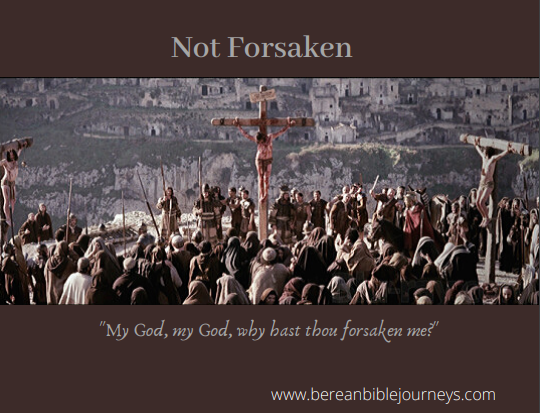
Herod, who had previously killed John the Baptist (Mark 6:16–27), desired to see Jesus perform a miracle (Luke 23:8). But Jesus answered him nothing (Luke 23:9). Meanwhile, the chief priests and scribes stood by, vehemently accusing Him (Luke 23:10), just as the devil accuses believers (Revelation 12:10).

By this point, we are confronted with a deeper question:
Do we see ourselves as sinners, or as those made righteous in Christ?

Scripture tells us that in Christ, we are made the righteousness of God (2 Corinthians 5:21). While we acknowledge that sin once defined us, it no longer defines our identity. We are called to see ourselves as He is (1 John 4:17), not as we were.

In Luke 23:12, Pilate and Herod—previously enemies—became friends over the matter of Jesus. As Scripture says, “Can two walk together unless they agree?” (Amos 3:3). Their agreement, however, was not rooted in truth, but in compromise.

Pilate made repeated attempts to release Jesus (Luke 23:13–16, 20, 22), but the crowd cried out, “Away with this man! Release Barabbas!” (Luke 23:18).

Barabbas was a criminal (Luke 23:19), yet the people chose him over Jesus.

This reflects a painful truth: humanity often prefers what reflects its fallen nature rather than what convicts it.

Proverbs 17:15 says, “He who justifies the wicked and he who condemns the righteous are both alike an abomination to the Lord.” Yet this is exactly what happened at the cross—we condemned the innocent and released the guilty.

Even so, through this unjust act came our redemption.

Jesus Himself struggled in the moment, praying, “Father, if You are willing, take this cup away from Me; nevertheless not My will, but Yours be done” (Luke 22:42). His sacrifice was not casual—it was costly.

But this raises an important reflection:
Human nature often resists righteousness because it requires sacrifice.

The people of Israel once desired a physical king rather than God’s direct rule (1 Samuel 8:6–7). They wanted strength they could see—a king like Saul—rather than a priestly, surrendered model.

Yet God’s ideal points us toward something deeper: a King who is also a Lamb—both ruler and sacrifice (John 1:29; Revelation 5:5–6).

Even today, many prefer power over submission, strength over surrender.

We see this again in Pilate. Though he knew the truth, he feared losing his position (John 19:12–13). In Luke 23:23–24, he finally gives in to the crowd and sentences Jesus to death.

This shows us the dilemma of humanity:
Knowing what is right is not the same as doing what is right.

Justice often fails on earth not because truth is absent, but because courage is lacking.

Even so, Jesus warned that following Him would come with suffering. He said, “Daughters of Jerusalem, do not weep for Me, but weep for yourselves and for your children” (Luke 23:28). Being chosen does not exempt us from trials.

On the cross, even the criminals revealed truth.

One mocked Him, but the other said, “We are punished justly… but this man has done nothing wrong” (Luke 23:41). In that moment, a condemned man acknowledged the innocence of Christ.

Sometimes, those with not in authority still speak the greatest truth.

Jesus then said, “Father, into Your hands I commit My spirit” (Luke 23:46). He gave His life willingly.

So we return to this truth:

It is never right to justify the wicked and condemn the righteous (Proverbs 17:15).

Even though Christ’s sacrifice brought us salvation, it should not make us comfortable with injustice or passive in doing what is right.

We are called to stand for truth, even under pressure.
We are called to live as the righteousness of God, not just speak it.

If we truly believe we are the righteousness of God in Christ, then we must also choose to act like it.

In closing, I affirm this:

I have been made the righteousness of God in Christ Jesus (2 Corinthians 5:21).

Please pray for me, that as I water others, I will also be watered (Proverbs 11:25).

Thank you.

Hasten Thy Word to Perform – Jeremiah 1:16, 19, 2 Timothy 4:6

I am always intrigued by the life of Jeremiah. Even from his mother’s womb, God already knew what He wanted to accomplish through him and saw that he would be malleable to do His will (Jeremiah 1:5). God often walked closely with the men He used throughout their lives, especially the prophets.

In Jeremiah’s case, it’s as if God told him: “Just be ready to do what I ask. Don’t say you are too young, I am a child” (Jeremiah 1:6). God was saying clearly: no excuses. Many of us are called, just like Jeremiah, yet we give reasons why we cannot or should not do His will.

Jeremiah 1:16 shows the purpose of his calling: “to utter His judgments against all their wickedness: the wickedness of forsaking the Lord their God, burning incense to other gods, thereby worshipping the works of their own hands.” Notice how God’s calling differs for different people. For example, when Moses was called, he was told he would be the deliverer of his people (Exodus 3:10). Different people, different times, different purposes.

God also promised Jeremiah in verse 19: “They shall fight against you, but they will not prevail, for the Lord is with you to deliver you.” What a powerful assurance! Even when opposition comes, God equips and protects those He calls. In fact, by Jeremiah 21:2, the people of Judah already recognized that Jeremiah could hear the voice of God and intercede. In Jeremiah 26:12-13, we see him faithfully doing exactly what God asked him to do.

Today, we do not need a human intercessor because we have a Great High Priest who intercedes for us. So I ask: what is the Lord asking you to do? If you hear His voice today, do not harden your heart. Listen and obey, as Jeremiah did. Do not say, “I am too young”—He who fills the heavens and the earth sees you. Jeremiah 23:24 reminds us: “Can any hide himself in secret places that I shall not see him? Saith the Lord. Do I not fill heaven and earth? Saith the Lord.” One of my favorite verses.

Obedience is not about age, status, or circumstance—it’s about readiness, willingness, and trust in God’s purpose. Hasten thy word to perform, and do what He asks, just like Jeremiah.

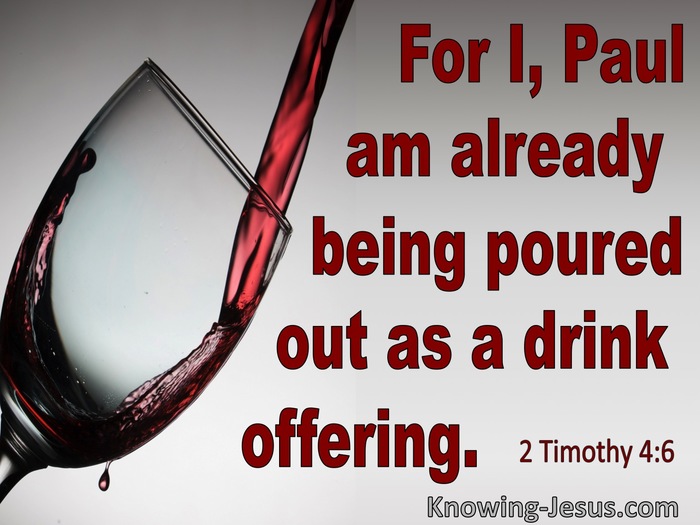
Every measure he poured into us, was so we could build others up and spread the gospel. 2 Timothy 4:6, Paul uses the metaphor of being “poured out as a drink offering” to signify his impending death and total dedication to God through his ministry.

Suffice to say that wine doesn’t become wine without the wine press. If God is greater; then let him be greater in you, if he is higher; then let him be higher in you. For there’s no greater love you will find except in his will.