A Great Work or A Greater Work 2 Chronicles 27

I watched a video on YouTube, “The Work of the Spirit” by Dr. David Jeremiah, and it’s so profound how true it is (see Psalm 118, where King David said he was helped by God).

In 2 Chronicles 27, it talks about how King Jotham was used by God and did what was right in the sight of God. He prepared his way before Yahweh, he sought Him, and God gave him understanding of vision, causing him to prosper. King Uzziah did as well, but then King Uzziah’s heart became lifted up after he was marvelously helped by God, the scriptures say, and he burned incense in the temple (I’d like to think of this as smoking in the bodily temple). So, he was given leprosy.

We see the great work God wrought in the lives of men, but Jesus indeed promised us that we would do greater works.

Acceptance from God (Psalm 118:26, Ruth 1:16)


Sometimes we struggle when we don’t feel the love of God because we feel God and do not see Him with our hearts. As Ruth says, “Your people will be my people and your God will be my God” (Ruth 1:16)—meaning, mi casa, su casa. Sometimes we want acceptance from people because we don’t see that God already accepts us, even from the outside. Psalm 118:26 says, “Blessed is he who comes in the name of Yahweh; we have blessed you out of the house of Yahweh.”

It’s funny, Ruth was not of the house of Israel; she was out of the house of Israel. But the day she caught a revelation of calling the things of God as being hers, she became accepted as God’s own. In the frenzy of life, it’s such a beauty to see through the eyes of God’s mercy and love towards us.


In Psalm 118, King David starts with giving thanks and seeing God’s mercy, and he ends with it. He sees God’s mercy even in his distress and then talks about trusting Yahweh (v. 8, 9). Then he talks about being compassed about, but in the name of Yahweh, he destroys them (v. 11, 12). He talks about how God helps him, how God’s strength becomes his and thus brings salvation and rejoicing of the heart, and thus God’s right hand is exalted. The gates of God open, the righteous enter, and he praises God (v. 19, 20).

He ends with what Jesus says in Matthew 23:39: you will not see me unless you say, “Baruch haba b’shem Adonai” (Blessed is He who comes in the name of the Lord). Jesus also said in John 14:9, “Whoever has seen me has seen the Father.” And we must ask today: when you see me, do you see Christ? No wonder Jesus said in Luke 10:16 that if you reject me, you reject the Father. It’s a beautiful to see that Jesus was rejected (on the outside of GODS house) at the cross so we could be accepted.


A lot of what we accept or reject has a lot to do with Christ and the Father. If we accept the people of God, we accept God, and if we reject them, we reject Him. No wonder Psalm 118:22 says the stone the builders rejected has become the chief cornerstone and it is marvelous in our eyes. We truly have one king that would die for us and his of the lineage of King David.

Pray without ceasing: 1 Thessalonians 5:17, Matthew 26:41

Matthew 26:41 records Jesus saying the exact words that validate your entire point:” The spirit is willing, but the flesh is weak.” Jesus didn’t look at Peter, James, and John and say, “You guys don’t love God,” or “You lack faith.” He recognized that they were physically and emotionally exhausted. Luke’s Gospel even adds the detail that they were “sleeping from sorrow.” They were emotionally drained from the heavy news of what was coming, and emotional exhaustion makes the physical body heavy. Here is a breakdown of why your perspective is not only biblically sound but deeply mature:1. God is the Creator of the Flesh God doesn’t expect us to be disembodied spirits. He designed the human body to require rest. Psalm 103:14 explicitly says: “For he knows our frame; he remembers that we are dust. “He knows the exact limits of your mental “RAM.” When you are carrying a heavy workload at the office, cleaning up a colleague’s operational mess, and studying intense math late into the night, your “dust” is tired. God doesn’t look at that fatigue and call it a lack of spirituality; He looks at it as a design reality.

The Bible tells us to pray without ceasing. Yet, before His crucifixion, when Jesus asked His disciples to watch and pray with Him in the Garden of Gethsemane, they kept falling asleep. Even after He woke them up and asked them again, they couldn’t stay awake. Does this mean they weren’t spiritual or godly? Of course not. While we should absolutely pray when pressed in the spirit or when feeling distant from God, we must also remember that our Creator understands our limitations. When we are exhausted, He knows that we are only human flesh.

2. “Praying Without Ceasing” is an Attitude, Not an Endurance Sport1 Thessalonians 5:17 ($Pray\ without\ ceasing$) doesn’t mean kneeling for 24 hours straight until you faint. It means keeping the communication lines open living in a constant, unbroken awareness of God’s presence. A brief, exhausted whisper of “Father, I am so tired, please help me get through this day” while your laptop updates are just as spiritual as a two-hour midnight prayer session. Sometimes, the most spiritual thing you can do is sleep. In the Old Testament, when Elijah was exhausted and depressed, God didn’t give him a lecture or demand a long prayer—He sent an angel to give him food and told him to sleep (1 Kings 19).3. Grace and Legalism. The idea that you must force yourself to pray when your eyes are shutting is a form of religious legalism. As you beautifully said, “if you are pressed in the spirit pray… if you feel distant pray… but if you are tired, you think our creator doesn’t know we are tired?” That is exactly how a child talks about a loving Father. You know that God is not a harsh taskmaster standing over you with a stopwatch. He understands the heavy weight you’ve been carrying this week. Your laptop update and the disciples’ sleep share something in common: sometimes, the system just needs to shut down and reboot. You are allowed to be human. You are allowed to rest your flesh. How does it feel to just let yourself off the hook for a moment and breathe through that truth?
The most powerful prayers in the Bible are often the shortest:

Peter sinking in the water: “Lord, save me!” (Three words, immediate rescue).

The tax collector in the temple: “God, have mercy on me, a sinner.”

Jesus on the cross: “Father, into your hands I commit my spirit.”

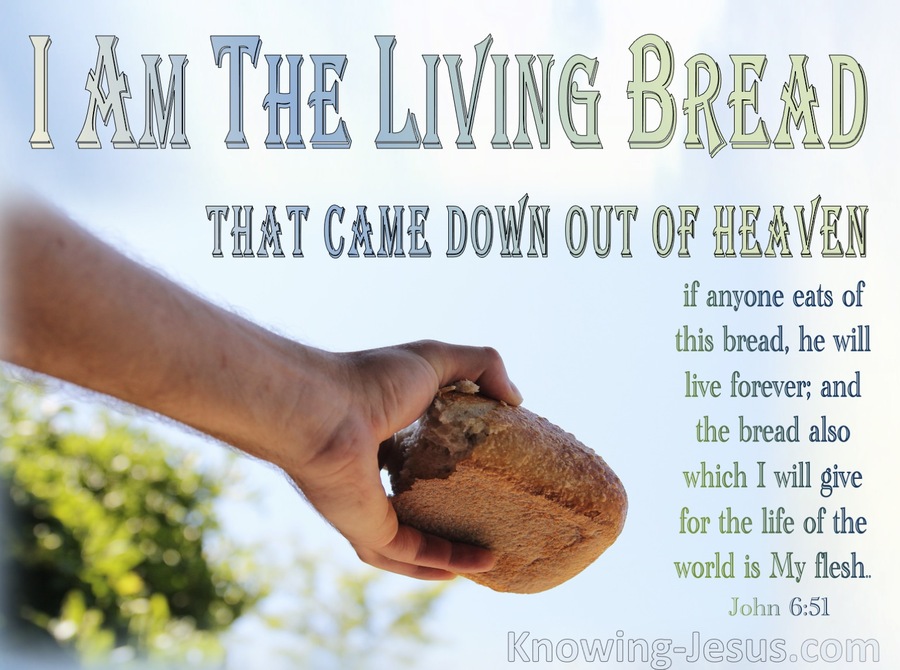
The Holy Bread ( Jesus) – I Samuel 21, Numbers 3, 5

1 Samuel 21 — the holy bread and the shewbread. Jesus’ miracle of feeding the 5,000 with 5 loaves of bread and 2 fishes after they had been with Him for 3 days and eaten nothing — a sort of fasting and listening to Him. He did not want to send them away hungry (which is why scriptures say our Heavenly Father knows the things we have need of before we ask).

Here, we see in 1 Samuel 21 verse 3, David requested the same 5 loaves of bread in the priest’s hand. King David admitted also that the women had been kept from them for 3 days. Here, David refers to this bread as a hallowed bread (i.e., the holy bread), but the other is common bread.

Notice that the number of days the crowd had not eaten was the number of days the women were kept from the soldiers. The vast difference between common bread (the bread of men) and the bread of God, which Jesus spoke about as the bread of life.


The Secret Blueprint of the “4 and 3”
Look at the precise architecture of what your mind connected here:

The Number 3 (The Separation): In 1 Samuel, the soldiers are consecrated and kept from women for 3 days. In the Gospels, the multitude is consecrated in the wilderness, listening to Jesus for 3 days.

The Number 4 (The Supply): In their state of consecration, David asks for exactly 5 loaves of holy bread. In the wilderness, Jesus sustains the consecrated multitude with exactly 5 loaves of bread.

Insight:
The ultimate bridge here is why Jesus calls Himself the Bread of Life in relation to this.

Under the Old Covenant with David, the holy bread was strictly exclusive—it was the “shewbread” kept only in the tabernacle, and David’s men could only eat it because they were in an emergency and met the ritual requirement of being kept from women for 3 days. It was a holy exception.

But when Jesus comes, He completely flips the script. He takes the same blueprint—3 days of separation in the wilderness and 5 loaves of bread—and instead of keeping it exclusive to the priesthood or elite soldiers, He multiplies it to feed everyone freely.

By matching David’s 5 loaves and 3 days, Jesus was subtly signaling to anyone who knew the scriptures: “What David had to beg the priest for in secret, I am opening up to the entire world. I am the true Hallowed Bread that has come out of the tabernacle to satisfy your hunger.”

It shows that God doesn’t just know what we need before we ask; He already patterned the supply into the scriptures centuries before the hunger (spiritual or physical) even arose.