
Title: Readiness, Wisdom, and the Kingdom of Heaven (Matthew 25 Reflection)

Today, we will be looking at the Kingdom of Heaven, readiness and wisdom, which is synonymous with oil, sleep, and slumber in Matthew 25.

Every time I read Matthew 25, I am convicted, especially if I haven’t done the work of God and have been pursuing my personal things.

In the Kingdom of Heaven, Jesus likens it to the parable of the ten virgins. He likens it to readiness and wisdom. Readiness means that there is oil of gladness for the things God has given to us. Wisdom is in terms of not sleeping and slumbering, to observe, to watch, and pray because of the times we are living in.

When we get to where the Savior comes, He will not say, “Verily, verily, I say unto you , I know you not.” This was Matthew 25:12. We know not the day nor the hour that the Son of Man cometh.

The Kingdom of Heaven is likened to a group of people also. It has two faces. It talks about readiness, wisdom, which is likened to oil of gladness, and sleep and slumber, which has to do with readiness and wisdom. It means that if your oil finishes, you have to get another oil.

May God help us. When I read these verses, I reflect like I am not doing enough, like I’m not the best of myself.

The Kingdom of Heaven is also likened to talent, given according to abilities. Talent, in my opinion, is something that you develop. Natural abilities are things God gives to you that come naturally.

In the book of Daniel, the Bible says that Daniel was given the ability to learn tongues. He could speak languages and he excelled in all kinds of science. He wasn’t just given a talent; he had an ability.

Here, we see that what God calls a good and faithful servant is one that He would give something, an ability or talent, and they would be able to use it for something. He doesn’t want us as Christians to be wicked and slothful, trying to reap where we didn’t sow.

We go to money exchangers. Even if it is just a piece of talent, we trade it out, not to be an unprofitable servant in the Kingdom of heaven notice not of God.

Sometimes I really feel like an unprofitable servant of the Kingdom of God. Every time I read these verses, I feel like God is telling me, “Look, you’re not putting as much for Me as you are putting for your work.”

One of the things that we have to be predominantly prepared for, at least for me, is that I always like this scripture that says, “Cast out the beam from your own eye, then you can preach to others, lest you yourself be guilty of the same sin.”

As we prepare for these last days, we know that when the last days come, we have to be watchful, set apart, to do what God wills. We prepare ourselves to do what God has commanded us to do.

One of the things He has said that we should do in the time that we wait is to feed the hungry. This could be someone that is literally hungry, physically hungry, for food.

The people that are thirsty, give them drink. Strangers, open your heart to them wisely. And clothe them with righteousness. Those that are sick and in prison, you come to them.

Many of us are in prison in our minds. Some of us are in prison physically. Some of us are sick in our minds. Some of us are sick physically.

There is not much good in speaking outwardly if you don’t do it inwardly. Real change comes from the heart.

When I read Matthew 25, I can see a lot of flaws in my own life. It is a very difficult passage to preach because it convicts me first that I’m not doing enough.

Like, I always feel like, “Okay, let me now come out and do something for God.” Maybe this is the conviction in the right direction. It’s only God that can convict the human spirit to see the wrong from the right, and the right from the wrong.

And I pray that whatever talent and ability we have, we use it to serve God. And that there is a readiness to know that He is at the door. He is at hand. So let my trade my talent to the exchangers….

One thing with oil is that it is useful for lots of things.

  • If you think about oil, the first place we saw oil was in the time Elijah went to the woman who had nothing. (1 Kings 17:8–16)
  • Elijah was sent to a widow in Zarephath during a time of famine.
  • He asked the woman what she had, and she said she just had a handful of flour and a little oil in a jar. (1 Kings 17:12)
  • He told her to bring vessels, more vessels, and God multiplied the oil, so it did not run out until the famine ended. (1 Kings 17:14–16)
  • Elisha also had a similar encounter with the widow whose husband left them in debt. (2 Kings 4:1–7)
  • He instructed her to gather empty vessels, and as she poured, the oil kept flowing until every vessel was filled. (2 Kings 4:3–6)
  • Both Elijah and Elisha had miracles connected to oil, showing provision, multiplication, and divine supply.
  • If you look at the book of Proverbs, wisdom is often associated with oil and preparation, especially in the call to seek wisdom diligently. (Proverbs 1–4 themes of wisdom as preparation and light)
  • The idea of oil also connects symbolically with readiness and spiritual preparedness.
  • In the Song of Solomon, there is imagery of beauty, fragrance, and anointing oils, showing intimacy and value. (Song of Solomon 1:3; 4:10)
  • Typically, oil was used for beauty, fragrance, and care of the body, including hair and skin in ancient times.
  • We also see the anointing of oil in the woman with the alabaster box. (Luke 7:36–38; Matthew 26:6–13)
  • She poured expensive oil (perfume) on Jesus, which was seen as preparation for His burial. (Mark 14:8)
  • Oil in the Old Testament was also used for anointing priests, kings, and sacred objects. (Exodus 30:25–30)
  • When you put the general picture of what oil is together, it was used for anointing, healing, honour, preparation, and worship.
  • I am saying the body of Christ because literally it means the church. (1 Corinthians 12:27; Ephesians 1:22–23)
  • If it is used to anoint His body for burial, it is called perfume or ointment, but it still represents preparation and honor.
  • You kind of understand that it is supposed to be an anointing.
  • Some people say it is an anointing, some people say it is a perfume.
  • You kind of understand that the body of Christ is supposed to have oil.
  • The body of Christ is the church.
  • So it is no wonder that Jesus would say in this parable that He is looking for oil. (Matthew 25:1–13)

(that’s when he steps in, when the task ahead seems bigger than you)
To Save Your Life Is to Lose It: Jeremiah, Zedekiah, and the Cost of Surrender (Jeremiah 37)

To Save Your Life Is to Lose It
The statement, “Whoever wants to save their life will lose it, but whoever loses their life will keep it,” was made by Jesus in the New Testament, specifically in Gospel of Matthew 16:25.

This teaching is also found in Book of Jeremiah 38, where King Zedekiah of Judah was seeking a word from God. In Jeremiah 37:3, it is stated that Zedekiah was looking for help from Pharaoh’s army to save his nation from the Babylonians. He refused to surrender his nation to the Babylonians, even after receiving a prophecy from Jeremiah that he would lose the city.

This led to Jeremiah being separated from the land of Benjamin. Jeremiah was accused of deserting to the Babylonians, beaten, and imprisoned. Yet, even in prison, the word of God did not change.

King Zedekiah, though he knew God, secretly asked Jeremiah for any new word from the Lord, hoping the prophecy against Judah would change. However, Jeremiah informed Zedekiah that he would still be delivered into the hands of the king of Babylon.

Jeremiah then questioned how he had offended the king or his servants. He stated that he was the king’s servant and asked why he had been put in prison. He also asked what offense he had committed, or what the people of Judah had done to warrant such treatment, resulting in his imprisonment.

After this, Jeremiah was moved from the house of Jonathan to the court of God, where he was given a loaf of bread daily, symbolizing a “bread of life” or salvation. This is illustrated in Jeremiah chapter 38, where Jeremiah’s relocation to the court of God signifies a transition from death to life.

Jeremiah was willing to die, yet he still spoke what God had commanded. He gave up his life so that he could speak the word of God, and God sustained him. Even when the Babylonians besieged Jerusalem, Jeremiah remained in custody, yet he was preserved.

The narrative in Jeremiah 38 highlights that positioning matters. Moving from the house of Jonathan to the court of God signifies a place of sustenance and life.

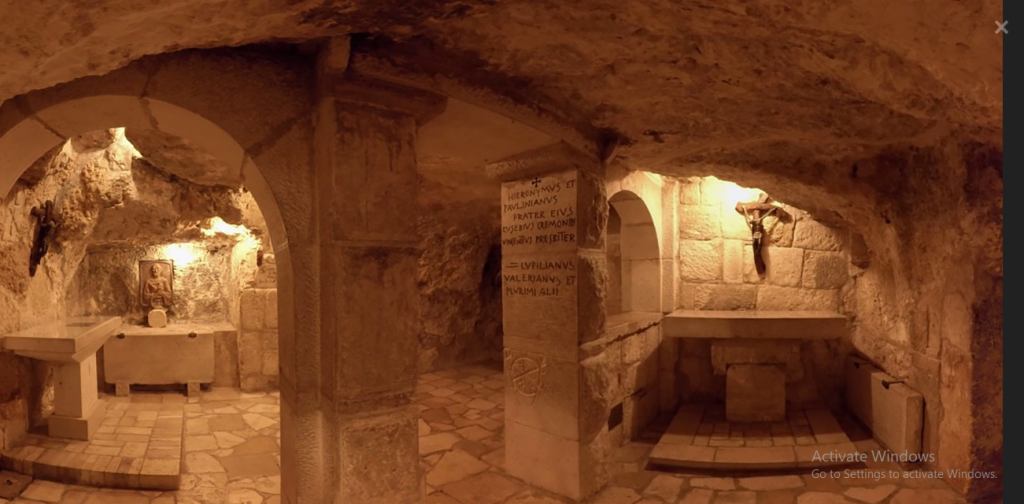
This also connects to the idea that Jesus is the Bread of Life, and Bethlehem, meaning “house of bread,” is where grace is found in the body of Jesus.


Jeremiah was eventually moved from the house of Jonathan the secretary, where he had been confined, to the court of the guard. There he was given a loaf of bread daily for as long as bread remained in the city. Though surrounded by judgment and famine, God sustained him.
This detail carries deep spiritual significance. While the nation was collapsing, God preserved the prophet who remained faithful to His word. Jeremiah was willing to lose his comfort, reputation, freedom, and even his life in obedience to God. In return, God sustained him in the middle of the siege.


The contrast between Zedekiah and Jeremiah is striking.
Zedekiah clung to self-preservation and lost everything. Jeremiah surrendered himself completely to God and was preserved.
This mirrors the teaching of Jesus centuries later. The person who desperately tries to save their life apart from God ultimately loses it, but the one who yields fully to God finds true life.
There is also a beautiful symbolic connection in Jeremiah receiving bread daily during his confinement. In the New Testament, Jesus declares Himself to be the Bread of Life. Even the name Bethlehem means “house of bread,” pointing believers toward the sustaining life found in Christ.
Jeremiah’s journey from imprisonment to preservation reminds us that positioning matters. Safety is not always found in resistance, human strategy, or control. Sometimes life is found in surrender to the will of God, even when that surrender appears costly.
The prophet was willing to die in order to remain faithful to God’s word, and because of that, God sustained him through the darkest days of Jerusalem’s fall.
In the end, the principle remains the same:
Whoever seeks to save their life will lose it, but whoever loses their life for God’s sake will find it.

if he is how is he choosing who he heals and does not heal (the house of bread, eat of the bread of salvation, I have burned my share of bridges, I have learned to tuck my tail as Jeremiah and run.)

The Great Physician – Jesus (Mark 1)

Recently, I haven’t been feeling well. Even now, I’m still not perfectly fine, but God has been so merciful. I opened the book of Zephaniah, and I could see that God has been with me, even though this sickness. You know, I’ve had some of my strongest moments before, but lately God has been dealing with me about being an unprofitable servant. So, I’ve just been praying, “God, have mercy on me.”

Then I opened the book of Mark, chapter one. I think it stood out to me more because, while I was sick, I kept seeing advice on what to do to get better. So, when I read Mark, it struck me differently. It was the first time I really thought about it this way—that Mark seemed to write with a kind of medical precision, almost like a physician. And it made me see that Jesus is the Great Physician—there’s really no better way to describe Him.


Mark begins with the words, “Prepare the way of the Lord, make straight His paths” (Mark 1:3). He talks about the remission of sins, and it made me think about how, even in medicine, doctors check the condition of a person before treatment—like examining blood levels and overall balance. In the same way, remission of sin points to something deeper: a spiritual check, a need for repentance, a restoring of balance within a person.

Then he speaks about baptism—how Jesus was baptized, the heavens opened, and the Spirit descended upon Him. After that, He was led into the wilderness to be tempted by Satan, and afterward, angels ministered to Him.

When you think about it, what do doctors do? They administer treatments, provide care, and guide recovery. The sequence in Mark 1 almost reads like a process—a pattern of diagnosis, cleansing, treatment, and restoration.

As we move further, in Mark 1:24, Jesus encounters a man with an unclean spirit. Throughout the chapter, there’s this recurring theme of what is clean and unclean. The man recognizes Jesus, and Jesus commands the spirit to be silent and come out of him—and it does.

It reminds me of how, in a hospital, there’s always an emphasis on cleanliness. You’re asked if your hands are clean, if things are sterile. But baptism shows us something deeper—it’s not just outward cleansing, but an inward transformation. It represents death, burial, and resurrection with Christ. So, the cleansing is both external and internal—what doctors do outwardly reflect what God does spiritually within us.


We also see Jesus’ healing Simon’s mother-in-law, who had a fever. After He healed her, she rose and began to minister to them. That stands out to me. When people are healed physically, they often thank the doctor—and rightly so—but here, her response was service. Healing led to ministry.


Jesus continues—casting out demons, healing all kinds of sicknesses. Then in verse 41, He meets a man with leprosy. The man says, “If You are willing, you can make me clean.” And Jesus responds, “I am willing; be clean.” Immediately, he is made whole.

This brings everything together—cleanness is not just about the outside. A person may be physically unclean, like the leper, but there is also a deeper need: the cleansing of the heart and spirit. When we talk about baptism, about the washing of water and the Word, it points to this total cleansing—inside and out.

That’s really what repentance is: the cleansing of the heart. And sometimes, it takes going through something like sickness to truly see this.

But in all of it, one thing is clear: Jesus Christ is our Great Physician. And there’s something about the Gospel of Mark that reveals this so powerfully.

I am obsessed with the song right now.