
Most people fail to realize that Ezekiel 3 and Ezekiel 18 is the cumulation of what’s in Ezekiel 33. What more it goes into great detail into explaining how idolatry, covetousness, and warning all play a grand plan in warning Gods people of what is to come if they will heed.
In biblical typology, the “sword” during the time of Ezekiel often represented the judgment of God upon a nation. In the New Testament, however, the sword is frequently used to represent the word of God (see Epistle to the Hebrews 4:12 and Epistle to the Ephesians 6:17). In a literal sense, of course, a sword is simply a weapon.
In Ezekiel’s day, he received a message from the Lord and was commanded to warn the people. If he failed to deliver the warning, the blood of those people would be required of him (see Book of Ezekiel 33:6).
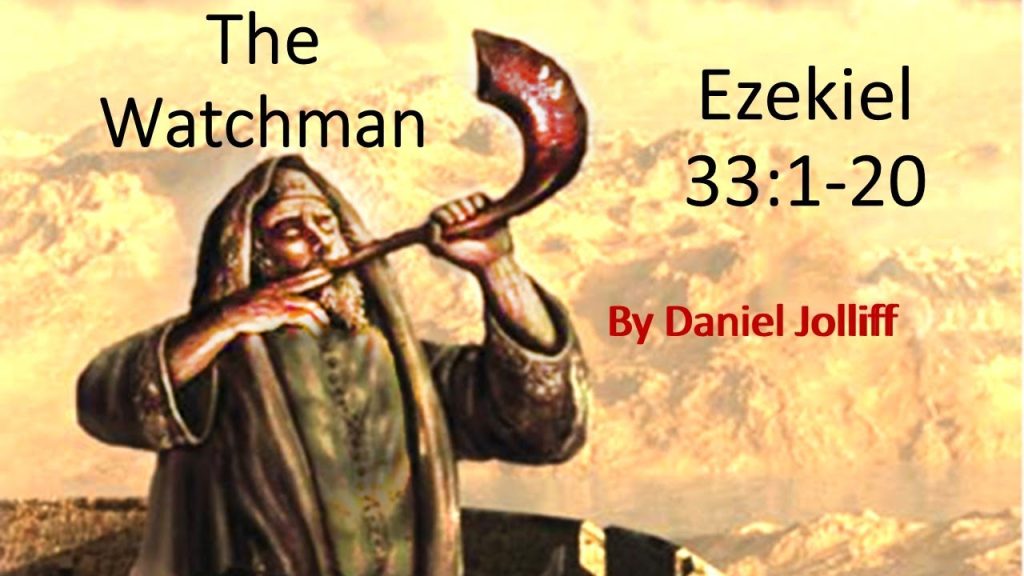
Book of Ezekiel 33:4 says that if anyone hears the sound of the trumpet and does not take warning, and the sword comes and takes him away, his blood will be on his own head.
As we approach days marked by wars and rumors of wars, as spoken of by Jesus Christ in Gospel of Matthew 24:6, He instructs us to be watchful and prayerful (see Gospel of Matthew 26:41). These scriptures feel especially relevant, because ultimately it is God who allows wars and who brings them to an end (see Book of Psalms 46:9). It is almost as though humanity is waiting for the sound of a trumpet—whether from heaven or from the alarm of war. One thing remains certain: the ways of the Lord, Yahweh, are just.

Book of Ezekiel 33:11–17 continues by showing how Yahweh’s ways are judged by people. The Lord declares that He takes no pleasure in the death of the wicked, but rather that they turn from their evil ways and live. In truth, every one of us carries some measure of wickedness within; therefore, God calls all people to repent and turn from evil.
However, if someone believes he is righteous and trusts in his own righteousness, yet later commits iniquity, none of his previous righteousness will be remembered; he will die because of his sin (see Book of Ezekiel 33:13).
This serves as a stark reminder that human righteousness, by itself, is like filthy rags before God (see Book of Isaiah 64:6). Therefore, as we go about our daily lives, we must continually remove idolatry and covetousness from our hearts, seeking instead to lay hold of what God has prepared for us (see Book of Ezekiel 33:25, 31–33).
For many of us, perhaps it is time to watch and pray.