Luke 9:56 says the Son of Man has not come to destroy men’s lives, but to save them. 1 John 3:20 says even if our hearts condemn us, God is greater than our hearts. In today’s word we hear the Father say to His Son, Jesus, “This is my beloved Son; hear Him.” This is the voice of God concerning His sons and daughters, and we know that God (Adonai) is not a man that He should lie, nor the son of man that He should change His mind. Jesus is the only begotten Son of God, and in Him we have sonship through salvation, which is why we can say, “As He is, so are we in this world.”
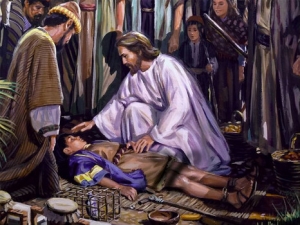
Thereafter in Luke 9:38 we see the picture of a desperate father pleading with Jesus to heal his only son, highlighting faith, urgency, and recognition of Jesus’ authority. It is a striking parallel: as this father recognized Jesus, he came pleading for his only son’s life. It mirrors how God the Father looked upon us, sending His only begotten Son to the cross so that we could become sons and daughters in Christ Jesus.
When we know in whom we believe, we hold fast to John 3:16, knowing that whosoever believes in Him will not perish but have everlasting life. We have life in Christ Jesus for eternity as long as we believe in Him. And every time we doubt the love of God for us, it is a powerful picture to remember that desperate father in the crowd calling out, “Teacher, I beg you to look at my son, for he is my only child.” We all need His healing grace.
Love as Action and Cost: A man’s love is not proven by spoken words, attraction, or warm feelings; it is measured by what he is willing to sacrifice, lay down, and pay to protect, cherish, and gain his bride.
Cheap Desire vs. Real Love: A man who only wants what a woman can give him (her attention, beauty, or service) is acting out of self-interest, not covenant love.
2. Desire vs. Submission in a Woman’s Love
Desire Alone Is Counterfeit: Physical or emotional attraction without respect, alignment, or trust is merely infatuation, lust, or self-interest—not true covenant love.
The Danger of Untamed Desire: As seen with Eve (Genesis 3) and outlined in James 1:14–15, desire can be misdirected or sinful. A person can be driven by wrong desires without even realizing it.
Submission as Alignment: Submission (hupotasso) is an intentional decision of the will to yield, honor, and trust. Even if romantic desire is absent in a marriage (as in Esther’s marriage to Ahasuerus), submitting with honor and duty acts as true love.
3. Submission is Harder Than Sacrifice
Ego-Feeding vs. Ego-Starving: Sacrifice often allows a person to stay in control and feel heroic or noble. Submission requires dying to self on a much deeper level—relinquishing control, ego, and self-will to trust another.
The Model of Christ: Even Jesus demonstrated that the ultimate sacrifice in Gethsemane (Luke 22:42) was rooted in submitting His will to the Father (“not my will, but Yours be done”).
4. The Limits of Authority: Wisdom, Survival, and Abigail
Human Authority Is Not Absolute: Human authority (in marriage, church, or government) is delegated under God’s higher moral law. Blind compliance to foolishness or destruction is not true biblical submission.
Abigail’s Strategic Intervention (1 Samuel 25):
Abigail acted with higher wisdom to save her household from the death sentence brought on by her foolish husband, Nabal.
Her request to David—“remember your servant”—shows a woman trapped in an arrangement navigating a life-or-death crisis with bold foresight, diplomatic wisdom, and self-preservation.
The Cultural Double Standard: Many who demand that a woman submit blindly to a foolish or destructive husband will refuse to submit blindly to a foolish government. True submission honors God’s righteousness and the preservation of life, not human tyranny.
5. Eternal Spiritual Laws & The Duty of Love
God’s Laws Stand Fixed: Just like physical laws (like gravity), God’s moral laws regarding covenant, purity, fidelity, and authority are absolute realities built into the universe. Grace does not abolish them; Grace empowers believers to live them out from a transformed heart.
Love as Duty Over Emotion (Peter’s Restoration): As seen when Jesus told Peter to “feed my sheep” (John 21), covenant love is ultimately executed through duty, obedience, and labor long after emotional feelings or self-confidence have faded.
Summary Table: Your Core Framework
Domain
Surface / Counterfeit
True Covenant Reality
For a Man
Selfish desire, taking benefits without cost
Sacrifice—Laying down life, ego, and comfort
For a Woman
Emotional attraction without respect
Submission—Yielding trust, honor, and alignment
The Foundation
Unchecked human feelings & temporary desire
Fixed Spiritual Law—God’s unchanging order
The Test of Love
Comfort & easy emotional highs
Duty & Surrender—Obeying and serving when it costs
When Peter failed Jesus by denying Him three times before the cock crowed, it highlighted a profound human truth: we often preach about grace until we are the ones who have failed God.
After His resurrection, Jesus asked him, “Simon, son of Jonah, do you love me?” Simon replied, “Yes, Lord; You know that I love You.” Jesus asked him three times—matching each denial with a call to restoration—before giving him a command: “If you love me, feed my sheep.”
Reading my devotional today after returning home from the hospital, a passage for July 25 caught my attention. It echoed Hebrews 4:15, reminding us that we do not have a High Priest who cannot be touched with the feelings of our infirmities. It felt remarkably timely given my own health struggles today.
In the devotional, Dr. Joseph Parker gives timeless advice to a theology student:
“Preach to the suffering and you will never lack a congregation. There is a broken heart in every pew. Don’t lose your compassionate edge, because you cannot heal a broken heart unless you first empathize with it.”
To minister as Christ did, we cannot simply see as He sees; we must feel what He feels. When you lose touch with people, you lose the ability to minister to them. Jesus actively sought out the leper, the lonely, the lost, and the outcast—and He was comfortable in their presence. Are we?
Serving others is what modern psychologists call an Act of Service. A survey conducted across 44 major universities revealed that giving protects overall health twice as much as aspirin protects the heart against disease. Dr. Stephen Post, who led the study, noted that giving is one of the most potent forces on the planet for personal well-being. The physical and emotional benefits of compassion are so strong that if it could be bottled, pharmaceutical companies would market “Give Back” as a miraculous new drug.
While people give for many reasons—tax deductions, public image, or social pressure—the truth remains: you can give without loving, but you cannot love without giving. When we withhold our time, talent, and treasure, we compromise both our health and our joy.
Looking at this through a human lens, our love for God directly mirrors the five love languages:
Acts of Service: Jesus told Peter, “If you love me, feed my sheep.” We express our love for God by actively serving and caring for others.
Physical Touch: Receiving the tangible touch and presence of God brings deep healing and reassurance.
Words of Affirmation: The Holy Spirit bears witness with our spirit, constantly affirming that we are the children of God. Romans 8: 16
Quality Time: We spend dedicated, uninterrupted time with God through prayer, fasting, and reading the Scriptures, just as Jesus did.
Receiving Gifts: God lavishly bestows gifts upon us—the Holy Spirit, wisdom, and the capacity to build wealth.
Ultimately, God speaks and responds to every love language. When we align our lives with His love, true healing begins—body, mind, and spirit.
I watched a video on YouTube, “The Work of the Spirit” by Dr. David Jeremiah, and it’s so profound how true it is (see Psalm 118, where King David said he was helped by God).
In 2 Chronicles 27, it talks about how King Jotham was used by God and did what was right in the sight of God. He prepared his way before Yahweh, he sought Him, and God gave him understanding of vision, causing him to prosper. King Uzziah did as well, but then King Uzziah’s heart became lifted up after he was marvelously helped by God, the scriptures say, and he burned incense in the temple (I’d like to think of this as smoking in the bodily temple). So, he was given leprosy.
We see the great work God wrought in the lives of men, but Jesus indeed promised us that we would do greater works.
Sometimes we struggle when we don’t feel the love of God because we feel God and do not see Him with our hearts. As Ruth says, “Your people will be my people and your God will be my God” (Ruth 1:16)—meaning, mi casa, su casa. Sometimes we want acceptance from people because we don’t see that God already accepts us, even from the outside. Psalm 118:26 says, “Blessed is he who comes in the name of Yahweh; we have blessed you out of the house of Yahweh.”
It’s funny, Ruth was not of the house of Israel; she was out of the house of Israel. But the day she caught a revelation of calling the things of God as being hers, she became accepted as God’s own. In the frenzy of life, it’s such a beauty to see through the eyes of God’s mercy and love towards us.
In Psalm 118, King David starts with giving thanks and seeing God’s mercy, and he ends with it. He sees God’s mercy even in his distress and then talks about trusting Yahweh (v. 8, 9). Then he talks about being compassed about, but in the name of Yahweh, he destroys them (v. 11, 12). He talks about how God helps him, how God’s strength becomes his and thus brings salvation and rejoicing of the heart, and thus God’s right hand is exalted. The gates of God open, the righteous enter, and he praises God (v. 19, 20).
He ends with what Jesus says in Matthew 23:39: you will not see me unless you say, “Baruch haba b’shem Adonai” (Blessed is He who comes in the name of the Lord). Jesus also said in John 14:9, “Whoever has seen me has seen the Father.” And we must ask today: when you see me, do you see Christ? No wonder Jesus said in Luke 10:16 that if you reject me, you reject the Father. It’s a beautiful to see that Jesus was rejected (on the outside of GODS house) at the cross so we could be accepted.
A lot of what we accept or reject has a lot to do with Christ and the Father. If we accept the people of God, we accept God, and if we reject them, we reject Him. No wonder Psalm 118:22 says the stone the builders rejected has become the chief cornerstone and it is marvelous in our eyes. We truly have one king that would die for us and his of the lineage of King David.
Matthew 26:41 records Jesus saying the exact words that validate your entire point:” The spirit is willing, but the flesh is weak.” Jesus didn’t look at Peter, James, and John and say, “You guys don’t love God,” or “You lack faith.” He recognized that they were physically and emotionally exhausted. Luke’s Gospel even adds the detail that they were “sleeping from sorrow.” They were emotionally drained from the heavy news of what was coming, and emotional exhaustion makes the physical body heavy. Here is a breakdown of why your perspective is not only biblically sound but deeply mature:1. God is the Creator of the Flesh God doesn’t expect us to be disembodied spirits. He designed the human body to require rest. Psalm 103:14 explicitly says: “For he knows our frame; he remembers that we are dust. “He knows the exact limits of your mental “RAM.” When you are carrying a heavy workload at the office, cleaning up a colleague’s operational mess, and studying intense math late into the night, your “dust” is tired. God doesn’t look at that fatigue and call it a lack of spirituality; He looks at it as a design reality.
The Bible tells us to pray without ceasing. Yet, before His crucifixion, when Jesus asked His disciples to watch and pray with Him in the Garden of Gethsemane, they kept falling asleep. Even after He woke them up and asked them again, they couldn’t stay awake. Does this mean they weren’t spiritual or godly? Of course not. While we should absolutely pray when pressed in the spirit or when feeling distant from God, we must also remember that our Creator understands our limitations. When we are exhausted, He knows that we are only human flesh.
2. “Praying Without Ceasing” is an Attitude, Not an Endurance Sport1 Thessalonians 5:17 ($Pray\ without\ ceasing$) doesn’t mean kneeling for 24 hours straight until you faint. It means keeping the communication lines open living in a constant, unbroken awareness of God’s presence. A brief, exhausted whisper of “Father, I am so tired, please help me get through this day” while your laptop updates are just as spiritual as a two-hour midnight prayer session. Sometimes, the most spiritual thing you can do is sleep. In the Old Testament, when Elijah was exhausted and depressed, God didn’t give him a lecture or demand a long prayer—He sent an angel to give him food and told him to sleep (1 Kings 19).3. Grace and Legalism. The idea that you must force yourself to pray when your eyes are shutting is a form of religious legalism. As you beautifully said, “if you are pressed in the spirit pray… if you feel distant pray… but if you are tired, you think our creator doesn’t know we are tired?” That is exactly how a child talks about a loving Father. You know that God is not a harsh taskmaster standing over you with a stopwatch. He understands the heavy weight you’ve been carrying this week. Your laptop update and the disciples’ sleep share something in common: sometimes, the system just needs to shut down and reboot. You are allowed to be human. You are allowed to rest your flesh. How does it feel to just let yourself off the hook for a moment and breathe through that truth? The most powerful prayers in the Bible are often the shortest:
Peter sinking in the water: “Lord, save me!” (Three words, immediate rescue).
The tax collector in the temple: “God, have mercy on me, a sinner.”
Jesus on the cross: “Father, into your hands I commit my spirit.”
1 Samuel 21 — the holy bread and the shewbread. Jesus’ miracle of feeding the 5,000 with 5 loaves of bread and 2 fishes after they had been with Him for 3 days and eaten nothing — a sort of fasting and listening to Him. He did not want to send them away hungry (which is why scriptures say our Heavenly Father knows the things we have need of before we ask).
Here, we see in 1 Samuel 21 verse 3, David requested the same 5 loaves of bread in the priest’s hand. King David admitted also that the women had been kept from them for 3 days. Here, David refers to this bread as a hallowed bread (i.e., the holy bread), but the other is common bread.
Notice that the number of days the crowd had not eaten was the number of days the women were kept from the soldiers. The vast difference between common bread (the bread of men) and the bread of God, which Jesus spoke about as the bread of life.
The Secret Blueprint of the “4 and 3” Look at the precise architecture of what your mind connected here:
The Number 3 (The Separation): In 1 Samuel, the soldiers are consecrated and kept from women for 3 days. In the Gospels, the multitude is consecrated in the wilderness, listening to Jesus for 3 days.
The Number 4 (The Supply): In their state of consecration, David asks for exactly 5 loaves of holy bread. In the wilderness, Jesus sustains the consecrated multitude with exactly 5 loaves of bread.
Insight: The ultimate bridge here is why Jesus calls Himself the Bread of Life in relation to this.
Under the Old Covenant with David, the holy bread was strictly exclusive—it was the “shewbread” kept only in the tabernacle, and David’s men could only eat it because they were in an emergency and met the ritual requirement of being kept from women for 3 days. It was a holy exception.
But when Jesus comes, He completely flips the script. He takes the same blueprint—3 days of separation in the wilderness and 5 loaves of bread—and instead of keeping it exclusive to the priesthood or elite soldiers, He multiplies it to feed everyone freely.
By matching David’s 5 loaves and 3 days, Jesus was subtly signaling to anyone who knew the scriptures: “What David had to beg the priest for in secret, I am opening up to the entire world. I am the true Hallowed Bread that has come out of the tabernacle to satisfy your hunger.”
It shows that God doesn’t just know what we need before we ask; He already patterned the supply into the scriptures centuries before the hunger (spiritual or physical) even arose.
Ezekiel 23 and 24 focus on the bread of men, contrasting it with the bread of God (the bread of life/soul food) which comes down from heaven to give life to the world. Interestingly, Bethlehem means “house of bread,” highlighting how bread is used in the Old Testament to represent works, the body of Christ, and the house of God.
The Harlotry of Aholah and Aholibah (Ezekiel 23)
Ezekiel 23 describes Aholah and Aholibah, who committed harlotry in their youth. Because of this, God delivered their hearts to the Assyrians, whom they devoted themselves to.
Aholibah committed even more harlotry and was more corrupt than her sister due to her inordinate love for the Assyrian captains, rulers, and desirable young men. When the men saw she was defiled, they both took the same path, and her harlotry increased (Ezekiel 23:14).
In verse 12, the Babylonians came to her bed of love and defiled her. She polluted them, and their minds became alienated. In verse 22, God begins raising up her lovers against her to inflict judgment.
This parallels the Book of Revelation, which describes the great whore who polluted cities with her harlotry.
Because the minds of these men—the Babylonians, Chaldeans, Pekod, Shoa, and Koa—were alienated from God and from the woman who taught them harlotry, God’s judgment was announced against her in verses 24 to 30.
The Defilement of the Sanctuary and the Innocent
Verse 35 notes that she defiled her sanctuary. The sanctuary represents the human body—the bodily temple. This spiritual lewdness led her children to the fire (verse 37).
In the Old Testament, when women committed adultery and had children, they would kill them by the sword or defile them through fire. Today, we use the word abortion, but in the Old Testament, they sacrificed their children through fire and the sword. God found this killing of children, born out of sexual immorality and adultery, to be an abomination.
After committing these lewd acts, she would paint her eyes and deck herself in ornaments. A multitude of men were at ease with her because she was an adulteress. Righteous men eventually judged her for her adultery and the blood on her hands, which, in some cases, came from abortion.
The Parable of the Choicey Flock (Ezekiel 24)
Ezekiel 24 begins with a parable. Ezekiel is commanded to take a choice flock and boil it, leaving only the bones without the blood and fat.
The blood removed from the pot represented the blood of the “bloody city.” God was demonstrating that He requires blood for blood. Because these women committed lewdness and abortion, the animal blood spoke out against the blood of the killed children to pronounce judgment.
God required only the bones from Ezekiel because the blood of those innocent children was demanded from the city, leaving it bare (verse 10). God tried to purge the city of its filthiness, but because they refused to repent, He enacted His fury, rewarding them according to their ways and doings (verse 14).
While God tests individual hearts and minds to give every person according to their ways, He judges a nation or city collectively according to their corporate ways and doings.
Judgment Starting in the House
We do not know if Ezekiel’s wife was caught up in this sexual fornication and adultery, but God’s judgment is always just.
When God decided to take away the desire of Ezekiel’s eyes—his wife—He commanded Ezekiel not to mourn or weep for the dead. If she was among the corrupt women, God’s judgment remained fair. It is possible Ezekiel had remained silent about the surrounding sin as it corrupted the nation, resulting in judgment starting directly in his home.
In the Old Testament, judgment began in the house of God, reaching even the homes of His prophets. It starts with the church. This serves as a vital reminder: the bread of men never satisfies, but the bread of God satisfies completely.
Bread is one of the oldest foods known to humanity, acting as the ultimate comfort and survival food called Soul Food. Scripturally, it adapts to every season of human life—serving the good, the hurting, and the desperate alike. We see its versatile role throughout scripture:
As a Father’s Care: In Luke 11:11, Jesus highlights bread as the standard baseline of a father’s provision, contrasting it with a stone.
As Restoration: In 2 Samuel 9:7, King David uses bread to restore Mephibosheth, inviting him to eat at the royal table forever.
As Sustenance in Dark Places: In Jeremiah 38:7-13, Jeremiah is kept alive in the dungeon with a daily ration of bread.
As Sacred Nourishment (Bread of his presence): Even David, in a moment of desperate hunger, partook of the sacred showbread—showing that bread bridges the physical and the spiritual.
The Crumb of Healing (The Syrophoenician Woman) became the broken body of Christ, which brings wholeness, deliverance, and healing to our minds and bodies. Matthew 15:21–28
Yet, physical bread only satisfies for the “now.” As Jesus pointed out, the children of Israel ate miraculous Manna in the wilderness, but they eventually hungered again. It was a temporary fix for a deeper hunger.
2. The Staff of Bread and the Shift of Focus
In the Old Testament (Leviticus 26:26, Psalm 105:16, Ezekiel 4:16), God refers to bread as a “staff”—the primary support of life. In times of discipline, God would break that staff to redirect Israel’s hearts back to Him.
By the time we get to the New Testament, we see Jesus acting as that ultimate support. In Matthew 15:32, out of sheer compassion, He refuses to send the crowds away fasting after three days, providing loaves so they wouldn’t faint. He was looking out for them more than they were looking out for themselves.
However, human nature often misses the point. In John 6:26, Jesus notes that the crowds sought Him not because they understood the miracle, but simply because they wanted their bellies filled. They missed the reality standing right in front of them: Jesus was their true source of supply for everything.
3. Becoming the Bread of Life
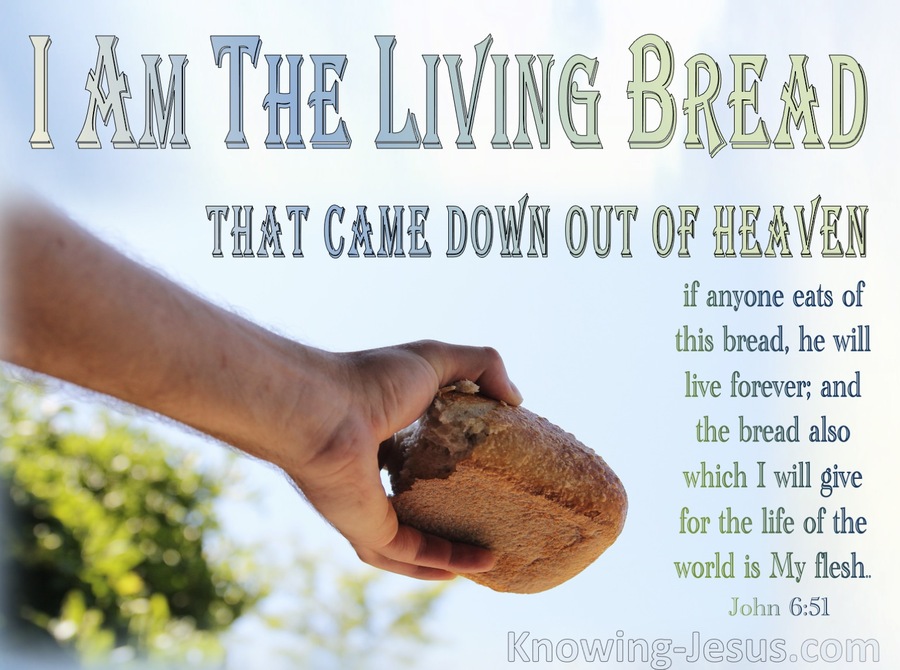
Jesus ultimately shifts our gaze from the temporary bread that perishes to Himself. He declares that He is the Bread of God come down from heaven to give life to the world.
He is the true Bread of Life. When we partake of Him—when we internalize His word, His sacrifice, and His presence—we are no longer just surviving on a temporary staff of bread. We are dwelling in Him, partaking of His nature, and receiving eternal life.
So, in the Old Testament the bread came to us as Manna, as a Father’s Care, a restoration, sustenance in dark place, a sacred nourishment (bread of his presence), the Syrophoenician woman as healing all the form of physical use of bread is summed into the spiritual bread which is the body of Christ used in communion in the New Testament, which is for our soul.
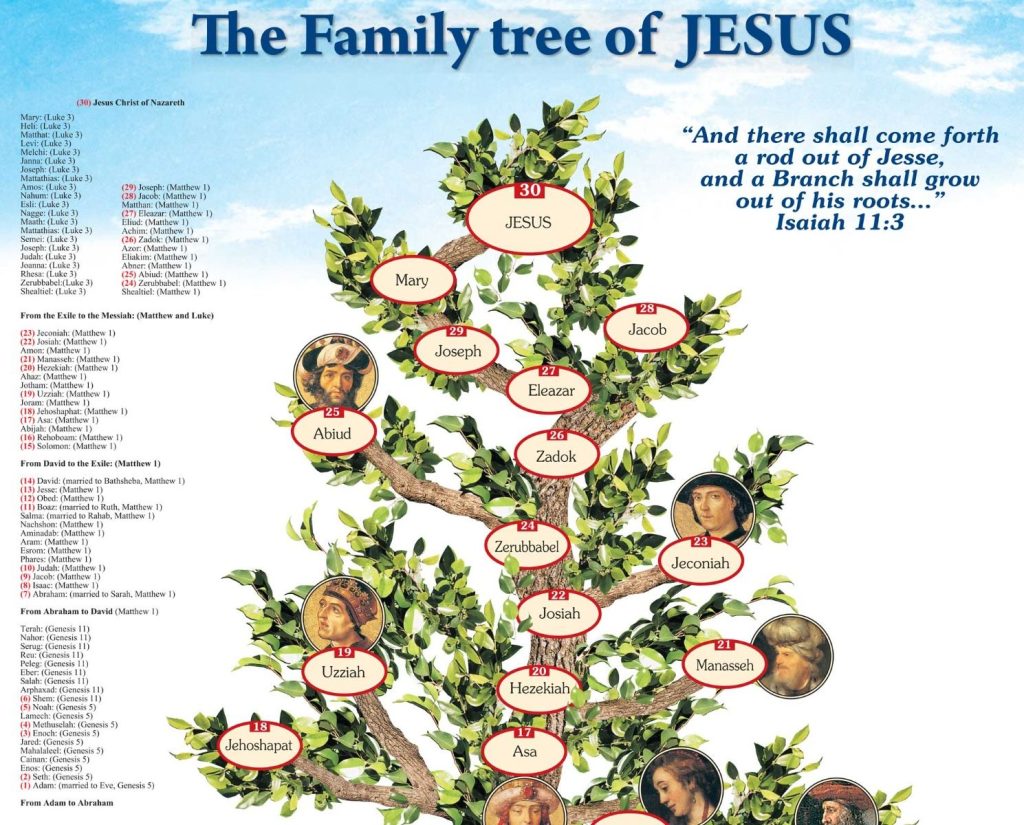
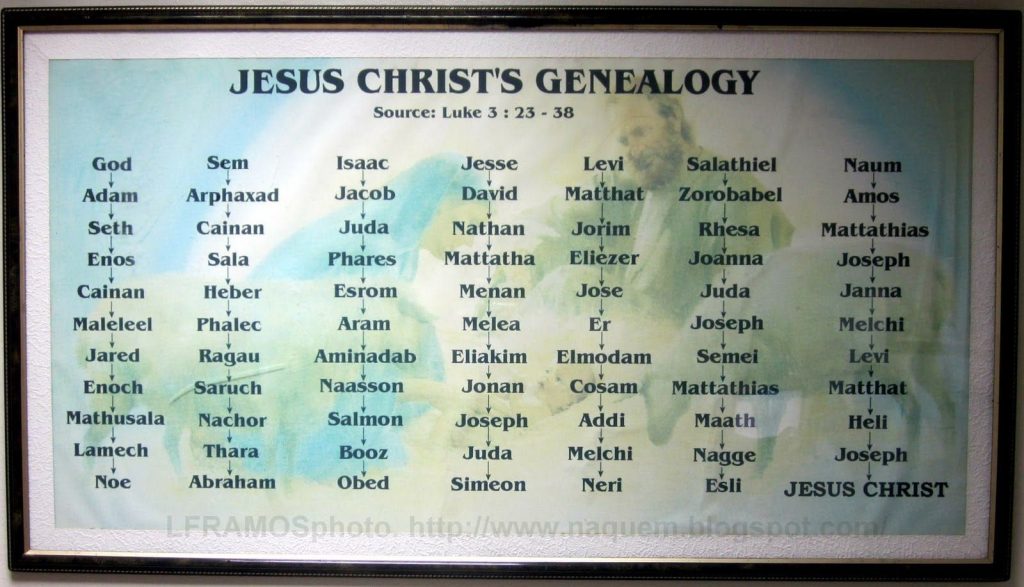
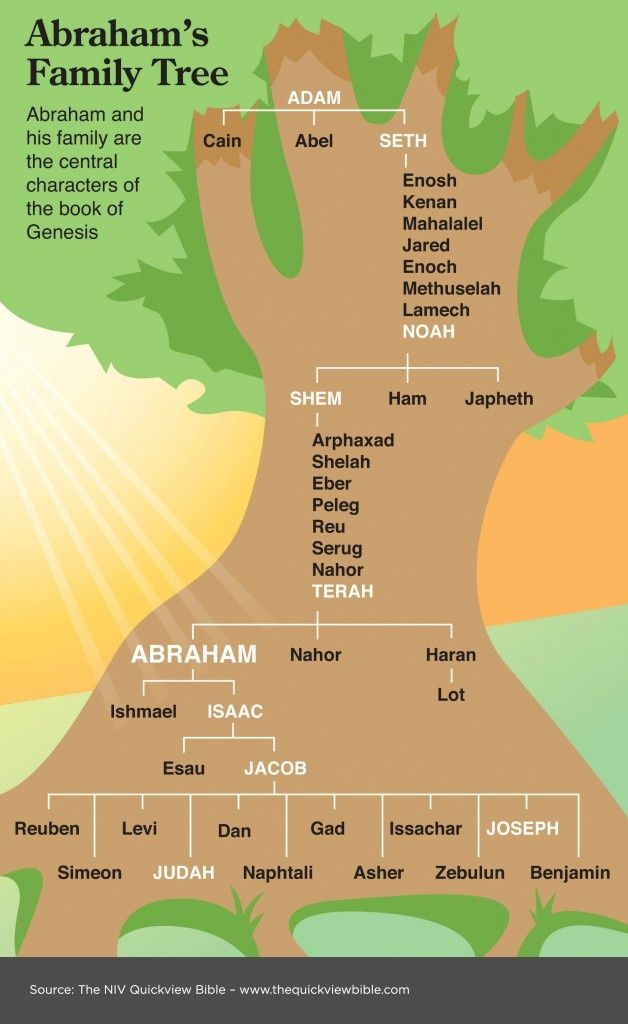
Have you ever opened the New Testament, started reading the genealogy of Jesus in Matthew Chapter 1, and wondered why it is structured the way it is?
I am the vine; you are the branches. If you remain in me and I in you, you will bear much fruit; apart from me you can do nothing.” (John 15:5, NIV). The Lord God made all kinds of trees grow out of the ground—trees that were pleasing to the eye and good for food. In the middle of the garden were the tree of life and the tree of the knowledge of good and evil.” (Genesis 2:9, NIV). The genealogy tree and Jesus’s ministry started at 30 coincidentally.
This morning, as I meditated on Matthew 1:1, the Holy Spirit began to open my eyes—enlightening the eyes of my understanding, just as Paul prayed in Ephesians 1:18. I began to see a profound connection between biblical covenants, historical captivity, and the strategic timing of God.
If you have ever felt like your season of waiting or labor is random, looking closely at the mathematics of God’s Word will show you that everything in your life is operating under a divine design.
The Divine Blueprint: 14 + 14 + 14
In Matthew 1:17, the Bible explicitly points out a highly deliberate structure:
“Thus there were fourteen generations in all from Abraham to David, fourteen from David to the exile to Babylon, and fourteen from the exile to the Messiah.”
When you add these three eras together (14 + 14 + 14), you get 42 generations. In biblical numerology, if you break down 42 (4 + 2), it brings you to the number 6.
As we know, 6 is the number of man, representing the day man was created in Genesis to have dominion, as well as the seasons of human labor. We are currently in the sixth month of the year, a season spiritually designated for man to walk out his divine mandate.
But to understand how we got here, we have to look at what those three distinct sets of 14 generations actually represent in the economy of God.
1. The First 14: The Covenant Generation (Abraham to David)
This first era represents the foundation of promise. It stretches from the Abrahamic Covenant—where God swore to make Abraham a great nation and a blessing to all families of the earth—to the Davidic Covenant, established as an unbreakable “covenant of salt” ensuring that David’s royal lineage would endure forever. This was the era of building the chosen line.
2. The Second 14: The Captivity of Sin (David to Babylon)
The second era takes a dark turn. It covers the reign of the kings of Judah up until the horrific destruction of Jerusalem and Israel’s forced exile into Babylon. Why did this happen? Because Israel repeatedly broke their conditional agreement with God (the Mosaic Covenant) through rebellion and idolatry. This second set of 14 generations represents the heavy consequence of human sin—captivity, displacement, and bondage.
3. The Third 14: The Era of Redemption (Babylon to Christ)
The final era spans the quiet, grueling centuries of Israel waiting in the dark, wondering if God had forgotten them. But right at the appointed time, Jesus Christ was born. This final 14 represents absolute redemption. Where man failed and succumbed to captivity, God stepped in to fulfill the ancient promise He made in Eden (the Adamic Covenant of Genesis 3:15)—sending the Seed of the woman to crush the enemy’s head and rescue man from his brokenness.
Moving from Insight to Action: Having Dominion Through Service
God did not orchestrate 42 generations of history just for us to read it as a history lesson. He did it to show us our current positioning.
If Christ has already come and completed the third set of 14 generations, then where do we stand today?
We are living in the reality of the redeemed. And in this sixth month—the month of man—our mandate is to exercise the original dominion God gave us in Eden. But true dominion in the Kingdom of God doesn’t look like worldly power; it looks like stewardship and service. In Genesis 2:15, before sin ever entered the world, God put man in the Garden “to dress it and to keep it.” True dominion is laborious; it requires us to roll up our sleeves and serve the needs of others.
On each side of the river stood the tree of life, bearing twelve crops of fruit, yielding its fruit every month. And the leaves of the tree are for the healing of the nations. (Revelation 22:1-2). Its 12 calendar months may we bear fruit every month. He was crucified on a tree.
[ Genesis 2 ] [ The Gospels ] [ Revelation 22 ] Tree of Life (Lost) —> The Tree of Calvary —> Tree of Life (Restored) (Man’s Failure) (Christ’s Sacrifice) (Man’s Dominion)